

DISCLAIMER: Product images are for illustration purposes only. Actual product characteristics including but not limited to size and colour may vary due to variations in harvesting and seasonal availability.
Couldn't load pickup availability
- Free Canada-wide delivery for orders over $200!
Enter your Postal code for Delivery Availability
 Return Policy
Returns applicable within 3 days of receiving your package. See our Refund Policy for further details.

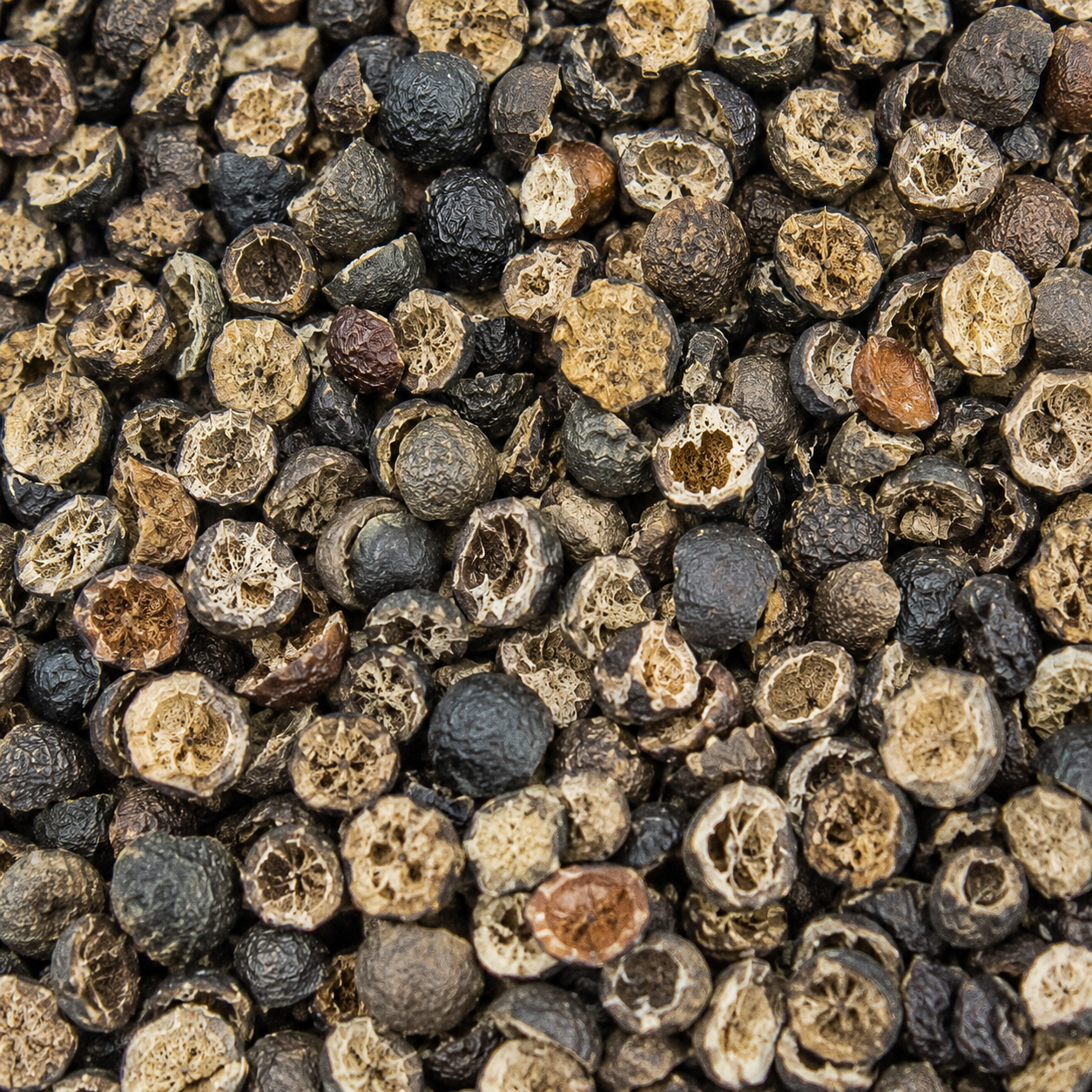
Botanical Name: Sabal Serrulata
Origin: USA
English Name: Saw Palmetto Berries C/S
French Name: Baies de Palmier Nain Coupées
Also Known As: Cut and Sifted Saw Palmetto Berries, Sabal Berries, Saw Palmetto Fruit, Sabal serrulata Fruit
Part Used: Berries of Sabal serrulata
Description: Saw Palmetto Berries C/S are produced from the ripe berries of Sabal serrulata, a low-growing, fan-leaved palm native to the southeastern United States. The plant forms dense clumps with long, slender stems and large, fan-shaped leaves that create a distinctive green canopy. Small, creamy-white flowers appear along the stems in spring, followed by the development of dark blue to black berries during late summer and early fall, which are harvested when fully mature for size, colour, and firmness.
The berries are selected at peak ripeness, exhibiting a dark blue-black exterior with smooth skin and dense, fibrous internal flesh. Only intact, undamaged berries are collected to maintain the natural structure, shape, and botanical identity, which is crucial for cut-and-sifted processing.
After collection, the berries are cleaned gently to remove stems, debris, and surface impurities. Drying is performed using controlled air or low-temperature methods to stabilise moisture while preserving colour, texture, and firmness. Once dried, the berries are cut and sifted into uniform pieces, resulting in a free-flowing product with consistent size and appearance.
The finished Saw Palmetto Berries C/S product consists of firm, cut berry fragments with a natural deep blue-black tone. The cut-and-sifted format offers the easy handling, precise measurement, and uniform blending while retaining the botanical characteristics of Sabal serrulata. The dried berries remain stable during storage and transport, preserving the natural appearance and texture.
Uses: Saw Palmetto Berries C/S are used in tea-style infusions, herbal blends, and fruit-based preparations where cut berry pieces are desired. They are suitable for decorative displays, craft projects, and educational botanical collections illustrating berry morphology. The cut berries are also used in formulation and manufacturing processes requiring uniform, identifiable dried berry pieces.
Storage: Store in a sealed container in a cool, dry place.
Safety & Disclaimer: Statements and products through out this site have not been evaluated by the Food and Drug Administration or Health Canada. These products are not intended to diagnose, treat, cure or prevent any disease or illness. Individual results may vary. Always seek the advice or consult your health care provider for your health concerns. If you are pregnant or have a medical condition please consult your health provider prior to use.
