

DISCLAIMER: Product images are for illustration purposes only. Actual product characteristics including but not limited to size and colour may vary due to variations in harvesting and seasonal availability.
Couldn't load pickup availability
- Free Canada-wide delivery for orders over $200!
Enter your Postal code for Delivery Availability
 Return Policy
Returns applicable within 3 days of receiving your package. See our Refund Policy for further details.

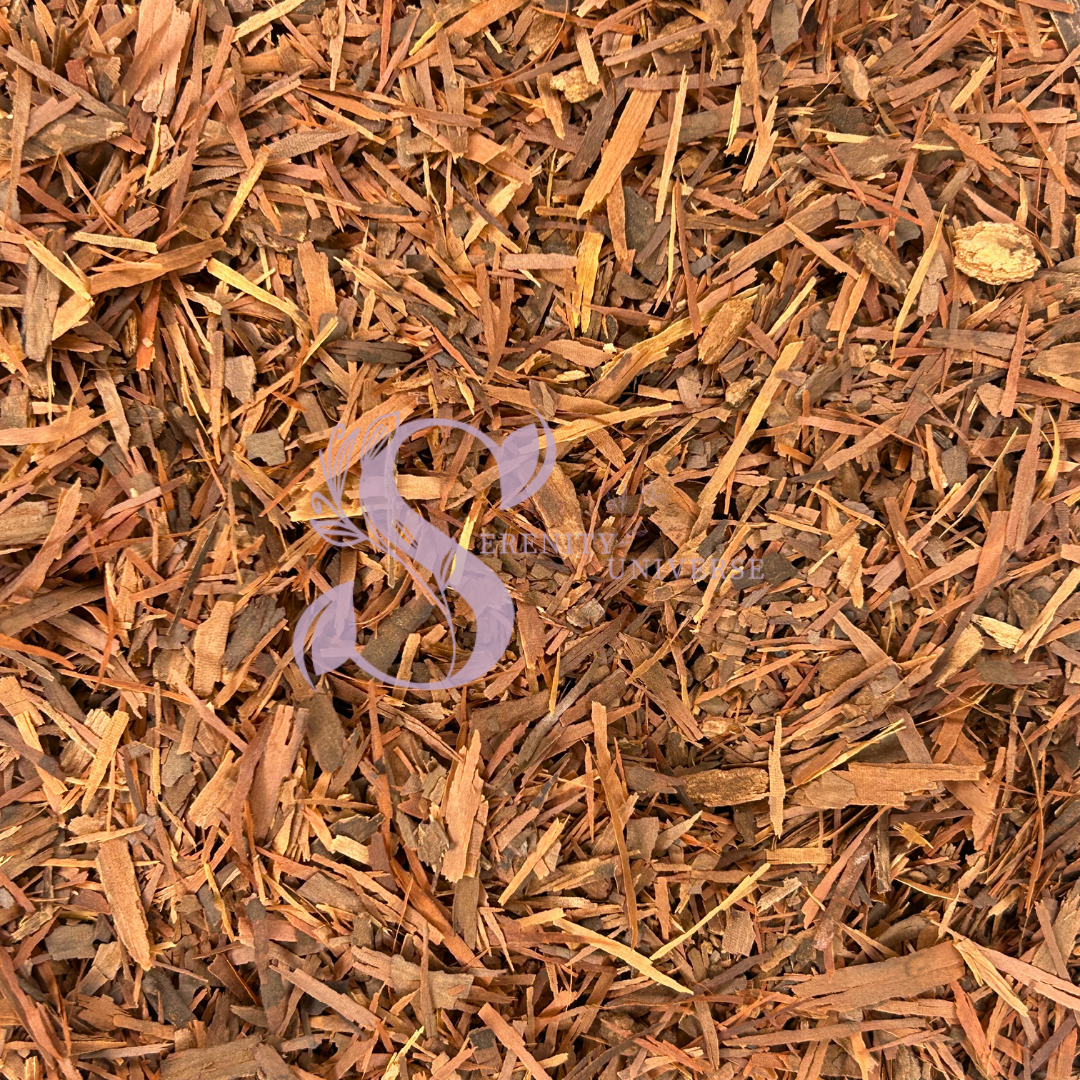
Botanical Name: Tabebuia impetiginosa / Handroanthus impetiginosus
Country of Origin: Brazil
English Name: Pau D’Arco Bark C/S
French Name: Écorce de Pau d’Arco Coupée et Tamisée
Also Known As: Lapacho Bark C/S, Taheebo Bark C/S, Ipe Roxo Bark C/S, Pink Lapacho Bark, Purple Lapacho Bark
Part Used: Inner bark of the tree, Handroanthus impetiginosus
Description: Pau D’Arco Bark C/S is prepared from the inner bark of Handroanthus impetiginosus, a large deciduous hardwood tree belonging to the Bignoniaceae family. The tree is native to the tropical and subtropical forests of Central and South America, where it grows in warm regions with distinct wet and dry seasons. Mature trees develop tall, straight trunks and broad canopies, reaching heights of 20 to 30 metres. During the flowering season, typically at the end of the dry period, the tree produces prominent trumpet-shaped flowers in shades of pink to purple, often appearing when the branches are temporarily leafless.
The inner bark is located beneath the thick, rough outer bark and is identified by its fibrous, layered structure and natural reddish-brown to tan coloration. Harvesting is carried out on mature trees when the inner bark is well developed and firm. The bark is removed in strips and selected for consistent thickness, intact fibres, and uniform surface texture, ensuring that the material retains its natural structural characteristics.
Following harvest, the bark strips are cleaned to remove outer bark fragments, dust, and environmental debris. The material is then dried using controlled air-drying or low-temperature drying methods. Drying reduces moisture while maintaining the bark’s layered appearance and fibrous grain. Once dried, the bark becomes rigid yet lightweight, preserving its shape and natural colour variation.
After drying, the bark is cut and sifted into a consistent C/S format. The finished Pau D’Arco Bark C/S consists of irregular bark pieces with visible fibres and natural curvature. Colour ranges from light tan to reddish-brown, reflecting the inner bark’s natural characteristics. The cut size supports visual identification and allows for uniform handling, blending, and infusion applications where whole bark texture is preferred.
Uses: Pau D’Arco Bark C/S is commonly used in tea-style infusions and botanical blends where visible bark pieces are desired. Its cut and sifted format makes it suitable for blending with other herbs, roots, or barks while maintaining clear botanical identity. The material is also used in crafting projects, decorative botanical displays, and educational plant collections that showcase tree bark structure. In manufacturing and formulation settings, it may be incorporated into products requiring natural bark texture, consistent cut size, and stable plant material.
Storage: Store in a cool, dry, dark place in an airtight container. Refrigeration not required.
Safety & Disclaimer: Statements and products through out this site have not been evaluated by the Food and Drug Administration or Health Canada. These products are not intended to diagnose, treat, cure or prevent any disease or illness. Individual results may vary. Always seek the advice or consult your health care provider for your health concerns. If you are pregnant or have a medical condition please consult your health provider prior to use.
