
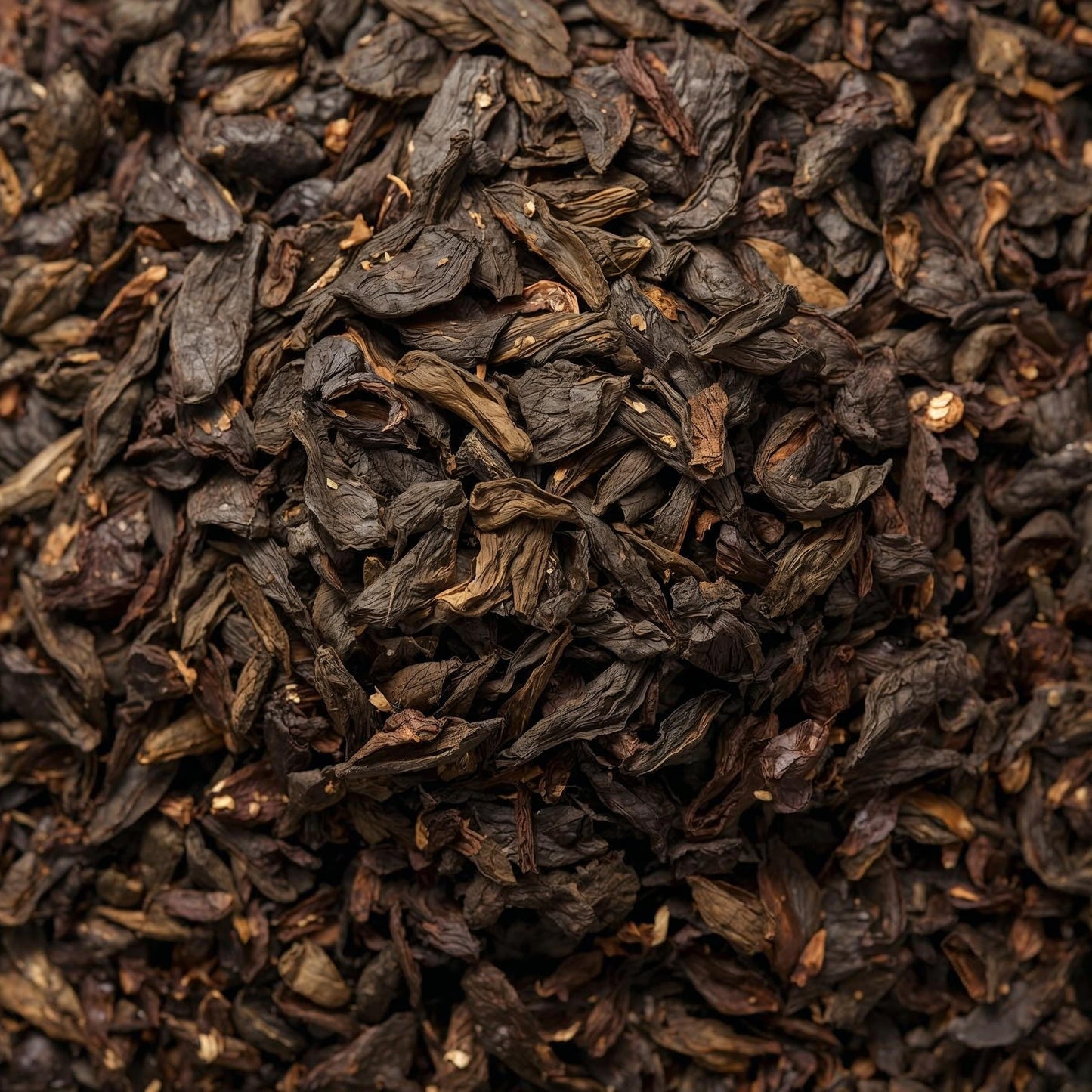
DISCLAIMER: Product images are for illustration purposes only. Actual product characteristics including but not limited to size and colour may vary due to variations in harvesting and seasonal availability.
Couldn't load pickup availability
- Free Canada-wide delivery for orders over $200!
Enter your Postal code for Delivery Availability
 Return Policy
Returns applicable within 3 days of receiving your package. See our Refund Policy for further details.

Botanical Name: Camellia sinensis
Country of Origin: China
English Name: Oolong Standard Tea
French Name: Thé Oolong Standard
Also Known As: Wulong Tea, Partially Oxidized Tea
Part Used: Mature leaves of Camellia sinensis
Description: Oolong Standard Tea is produced from the leaves of Camellia sinensis, an evergreen shrub in the Theaceae family. This plant is cultivated in temperate to subtropical regions with well-drained soils, moderate rainfall, and consistent humidity. Oolong tea production is most commonly associated with regions of China and Taiwan, where growing conditions support steady leaf development and controlled harvesting cycles. The tea plant forms a woody shrub or small tree with firm, oval-shaped green leaves that are suitable for repeated harvesting.
The leaves selected for Oolong Standard Tea are harvested at a mature stage, typically when they have reached full size and structural strength. After harvesting, the leaves are cleaned to remove field debris and allowed to wither under controlled conditions to reduce moisture content. The withered leaves are then gently rolled or bruised to initiate partial oxidation, a defining characteristic of oolong tea. Oxidation is carefully monitored and stopped at a mid-range level through heat application. The leaves are then dried to stabilize the product and preserve its structure.
Once processed, the tea leaves appear medium to large in size, often twisted or loosely rolled. Their colour ranges from greenish-brown to darker brown, reflecting the partial oxidation process. The dried leaves have a firm, dry texture and a clean, characteristic tea aroma. This form allows the leaves to maintain their shape during handling and infusion, making them suitable for consistent preparation and formulation.
Uses: Oolong Standard Tea is commonly used for preparing tea-style infusions by steeping the dried leaves in hot water, producing a clear and aromatic beverage. It is also used in culinary applications where brewed tea or dry leaves are incorporated into recipes such as desserts, baked goods, syrups, and sauces for flavouring purposes. In manufacturing and formulation settings, it may be included in blended teas, beverage bases, or specialty food products. The intact leaves are additionally suitable for educational and botanical reference collections that demonstrate tea plant processing methods and leaf structure.
Storage: Store in a cool, dry, dark place in an airtight container. Refrigeration not required.
Safety & Disclaimer: Statements and products through out this site have not been evaluated by the Food and Drug Administration or Health Canada. These products are not intended to diagnose, treat, cure or prevent any disease or illness. Individual results may vary. Always seek the advice or consult your health care provider for your health concerns. If you are pregnant or have a medical condition please consult your health provider prior to use.
