

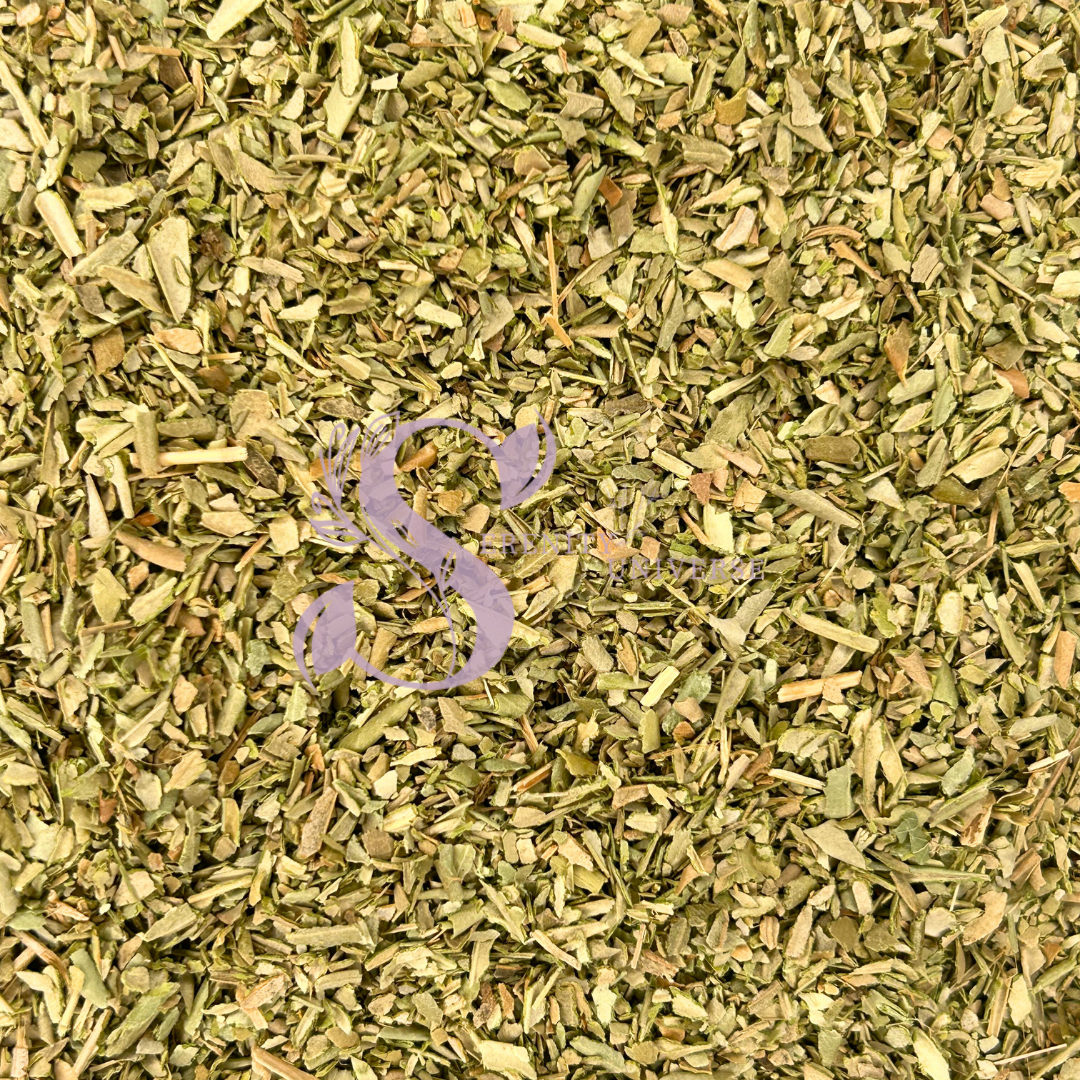
DISCLAIMER: Product images are for illustration purposes only. Actual product characteristics including but not limited to size and colour may vary due to variations in harvesting and seasonal availability.
Couldn't load pickup availability
- Free Canada-wide delivery for orders over $200!
Enter your Postal code for Delivery Availability
 Return Policy
Returns applicable within 3 days of receiving your package. See our Refund Policy for further details.

Botanical Name: Olea europaea
Country of Origin: Egypt
English Name: Olive Leaves C/S
French Name: Feuilles d’Olivier Coupées et Tamisées
Also Known As: Dried Olive Leaves, Cut & Sifted Olive Leaves, Olea europaea Leaf C/S, Olive Leaf Pieces
Part Used: Leaves of Olea europaea
Description: Olive is a small to medium-sized evergreen tree native to the Mediterranean region, widely cultivated in southern Europe, North Africa, and parts of Asia. The tree typically grows 3–12 metres tall, with a gnarled trunk, spreading branches, and narrow, lance-shaped green leaves that are dark green on top and silvery underneath. Olive leaves are harvested from mature trees during the growing season when they are fully developed, firm, and vibrant in colour, ensuring their natural texture and structural integrity for processing.
Fresh olive leaves are thin, flexible, and slightly leathery, with a subtle herbal aroma and smooth surface. The leaves are collected and carefully cleaned to remove dust, twigs, and other debris. Controlled low-temperature drying is then carried out to preserve the natural green colour, visible leaf veins, and characteristic texture while preventing brittleness or discoloration.
After drying, the leaves are cut and sifted into uniform pieces, maintaining visible leaf fragments while removing fines and broken pieces. The resulting cut and sifted leaves are free-flowing, consistent in size, and retain their natural appearance. This process ensures the botanical identity of olive leaves is preserved while creating a convenient, durable product suitable for blending, storage, and multiple applications.
Olive trees thrive in well-drained soils, full sunlight, and temperate to warm climates. They are hardy, drought-tolerant, and can live for several decades, producing dense foliage that can be harvested repeatedly during the growing season. The cut and sifted leaves retain their botanical features, colour, and texture, providing a high-quality ingredient for various applications.
Uses: Olive Leaves C/S are used in tea-style infusions, herbal and botanical blends, culinary preparations, craft projects, cosmetic formulations, decorative displays, and educational herb collections. Their free-flowing texture allows for easy blending and even dispersion in dry mixes or liquid preparations. The natural green colour, visible leaf fragments, and authentic botanical characteristics make them suitable for creative, instructional, and visual applications where identifiable plant material is desired.
Storage: Store in a cool, dry, dark place in an airtight container. Refrigeration not required.
Safety & Disclaimer: Statements and products through out this site have not been evaluated by the Food and Drug Administration or Health Canada. These products are not intended to diagnose, treat, cure or prevent any disease or illness. Individual results may vary. Always seek the advice or consult your health care provider for your health concerns. If you are pregnant or have a medical condition please consult your health provider prior to use.
