


DISCLAIMER: Product images are for illustration purposes only. Actual product characteristics including but not limited to size and colour may vary due to variations in harvesting and seasonal availability.
Couldn't load pickup availability
- Free Canada-wide delivery for orders over $200!
Enter your Postal code for Delivery Availability
 Return Policy
Returns applicable within 3 days of receiving your package. See our Refund Policy for further details.

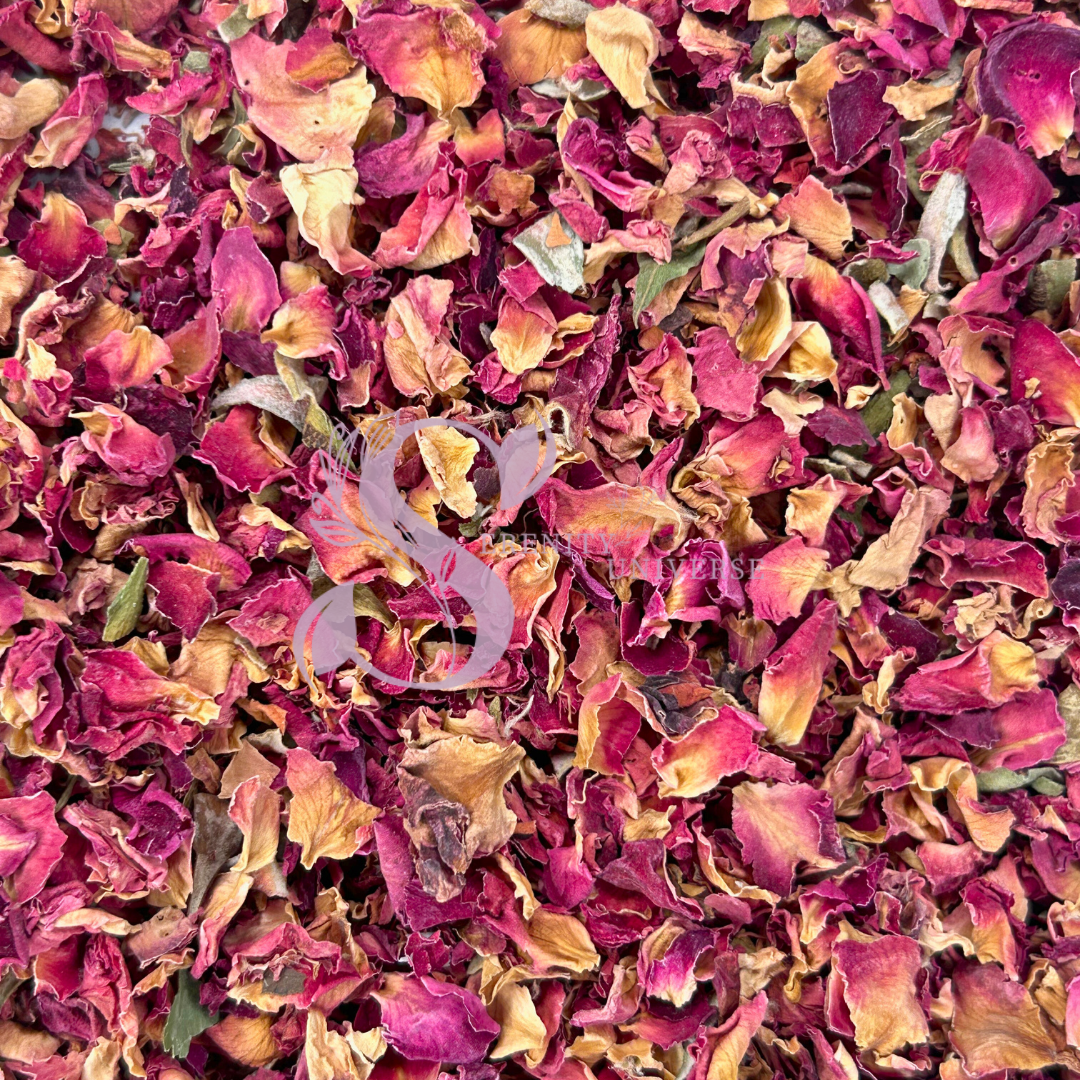
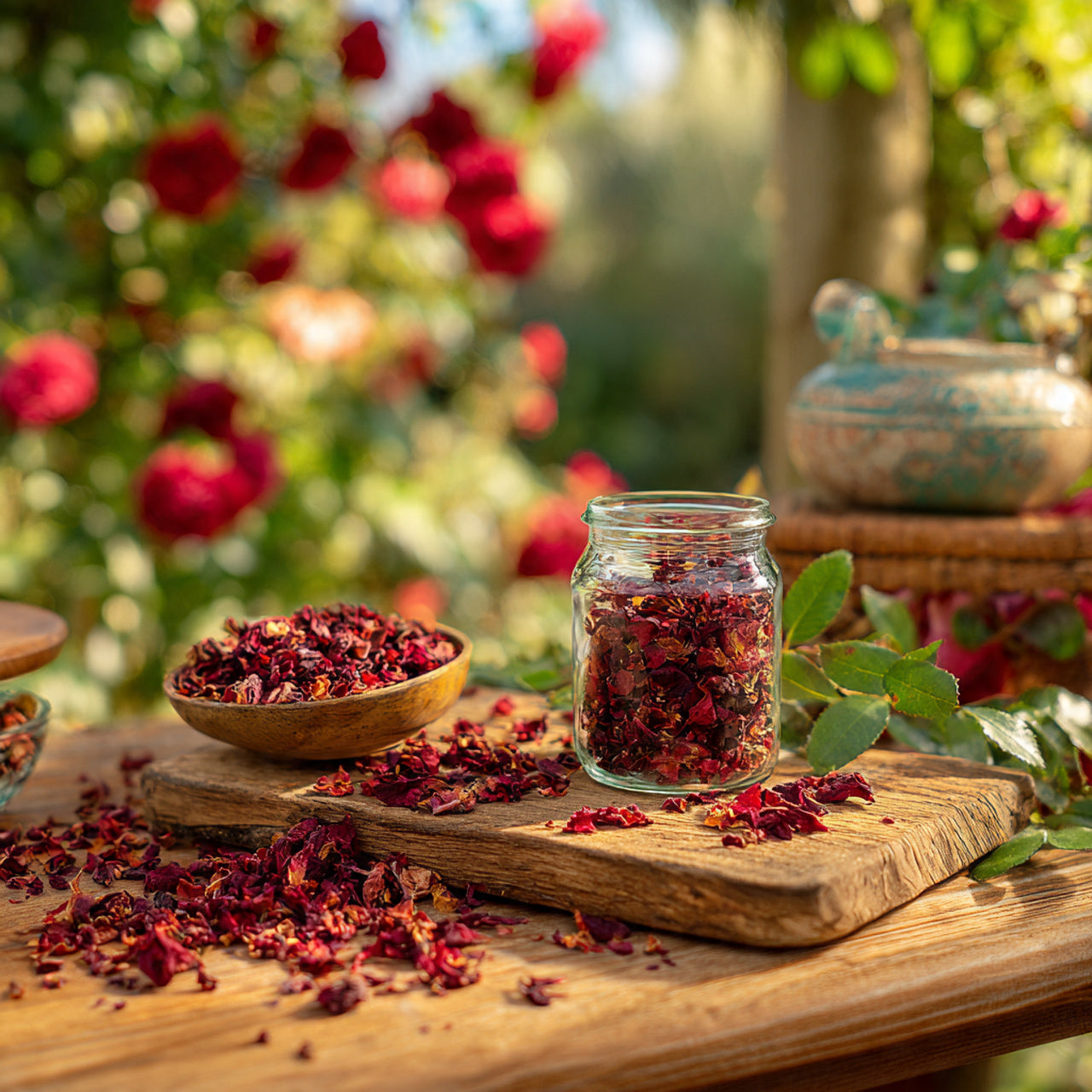
Botanical Name: Rosa Centifolia
Country of Origin: Egypt
English Name: Red Rose Petals
French Name: Pétales de Rose Rouge
Hindi Name: Lal Gulab Pankhudi
Also Known As: Red Rose Flower Petals, Centifolia Rose Petals, Dried Red Rose Petals, Garden Rose Petals, Cabbage Rose Petals
Part Used: Flower petals of the plant, Rosa centifolia
Description: Red Rose Petals are obtained from Rosa centifolia, a perennial flowering shrub of the Rosaceae family cultivated in temperate regions including Europe, North Africa, and parts of Asia. The plant develops as a dense, bushy shrub with woody stems, fine thorns, and compound green leaves. Flowering occurs primarily in late spring to early summer, when large, multi-layered blossoms grow and release their petals as they reach full size.
The petals are collected from fully matured flowers at peak bloom, when colour, size, and texture are most consistent. Each petal is broad, thin, and velvety, with softly curved edges and a rich red to deep crimson tone. Gentle selection ensures that only intact petals with uniform colour and natural form are chosen, retaining the characteristic appearance associated with Rosa centifolia.
After collection, the petals are carefully cleaned to remove natural field debris while preserving their delicate structure. Drying is performed using controlled air circulation or low-temperature methods to lower the moisture without compromising colour or surface texture. During drying, the petals preserve their layered form, drying flat or lightly curled while remaining lightweight and crisp.
The finished Red Rose Petals display a uniform red colour with a soft, papery texture and a mild, natural floral aroma. The dried petals are free-flowing and visually consistent, making them easy to measure, blend, and handle. Their stable structure and refined appearance allow the petals to retain the botanical identity of the rose while offering versatility for a wide range of applications.
Uses: Red Rose Petals are commonly used in tea-style infusions and floral blends for their colour and aromatic contribution. They are incorporated into cosmetic and personal care products such as soaps, bath blends, potpourri, and skincare formulations for various purposes. The petals are also used in decorative arrangements, craft projects, educational botanical collections, and manufacturing applications where natural floral materials with uniform colour and texture are required.
Storage: Store in a cool, dry, dark place in an airtight container. Refrigeration not required.
Safety & Disclaimer: Statements and products through out this site have not been evaluated by the Food and Drug Administration or Health Canada. These products are not intended to diagnose, treat, cure or prevent any disease or illness. Individual results may vary. Always seek the advice or consult your health care provider for your health concerns. If you are pregnant or have a medical condition please consult your health provider prior to use.
